Buying a Sanibel condo is about more than views, amenities, and monthly dues. If you only look at the unit and the fee sheet, you can miss two of the biggest cost drivers after closing: insurance and HOA finances. The good news is that with the right questions and documents, you can spot risks early, budget more accurately, and move forward with more confidence. Let’s dive in.
Why insurance and HOA health go together
In Sanibel, condo insurance and HOA finances are closely connected. Florida law splits risk between the association’s master policy, your individual HO-6 policy, and separate flood coverage. That means your real ownership cost depends on both what the association insures and how prepared the association is to handle deductibles, repairs, and reserve funding.
This matters even more in older coastal buildings. Reserve requirements, structural integrity reserve studies, and milestone inspections can all affect future dues and special assessments. A condo with a lower monthly fee can still become more expensive if the building is underinsured, underfunded, or facing major repair obligations.
How condo insurance is typically divided
What the HOA master policy may cover
Florida law requires condo associations to maintain adequate property insurance. The association may also carry flood insurance for common elements, association property, and units. In many cases, the master policy covers the building as originally installed, along with later alterations and additions.
Still, the master policy does not cover everything inside your unit. Florida law says certain interior items and personal property are excluded and become the unit owner’s responsibility. That is why you should never assume the HOA policy covers everything just because the building has association insurance.
What your HO-6 policy may cover
Your HO-6 policy is your individual condo owner policy. Florida consumer guidance says it typically covers personal property, certain building items not insured by the association policy, and personal liability. If you have upgraded interiors, it is especially important to review your limits so your coverage reflects current replacement costs.
You should also compare your policy with the association’s governing documents and insurance declarations. Florida consumer guidance advises owners to review the bylaws and master policy so they understand exactly where the association’s coverage stops and their own responsibility begins.
Why wind and flood are separate
A common mistake is to treat storm coverage as one issue. In Florida, wind and flood are different insurance problems. The hurricane deductible applies to windstorm losses during a hurricane, but it does not cover flooding.
Flood coverage is generally separate, and most homeowners policies do not cover flood damage. FEMA also notes that flood maps can help determine lender requirements, and NFIP flood policies typically have a 30-day waiting period unless a limited exception applies. For a Sanibel condo purchase, that means flood planning should happen early, not after closing.
Why HOA fees can change after you buy
Monthly dues are only part of the cost
When you buy a condo, the listed HOA fee is only the starting point. Florida law ties association budgeting to reserve funding, and reserve items may be funded through regular assessments, special assessments, lines of credit, or loans. In practical terms, a building can keep dues lower today but still face larger bills later.
This is one reason buyers should look past the monthly number. If the building has major repair needs, limited cash reserves, or large insurance deductibles, owners may still have to contribute more through future assessments.
Deductibles and uninsured losses can come back to owners
Florida law says deductibles and damages above the association’s insurance coverage are generally common expenses of the condominium, unless a unit-owner-caused exception applies. Florida consumer guidance also says associations may assess owners for common-area damage when the loss is not covered or when reserves are not enough to pay for repairs.
That means a storm can trigger more than an insurance claim. A large hurricane deductible, uninsured damage, or reserve shortfall can become a shared owner expense across the community. For buyers, that is not just a paperwork detail. It is part of your real budget.
Why older Sanibel condos need extra review
Structural reserve rules matter
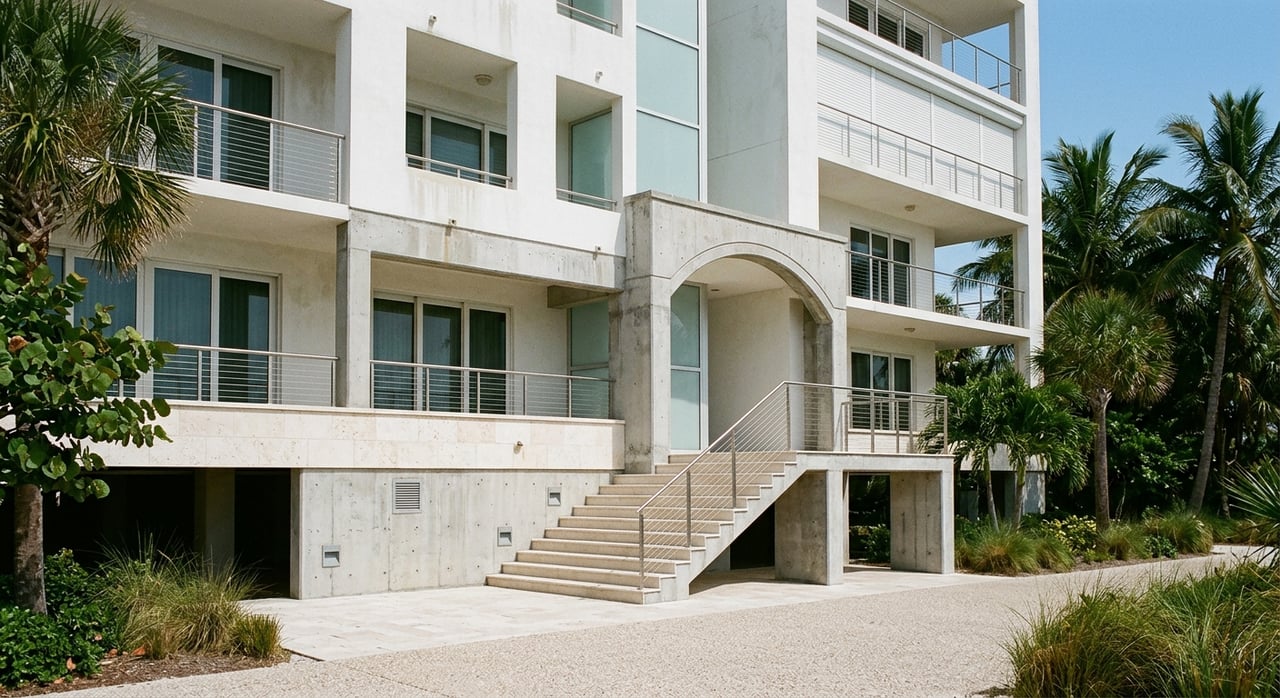
Florida’s structural integrity reserve study rules are especially important for older coastal condos. A residential condominium association must have a structural integrity reserve study for each building that is three habitable stories or higher. The study covers major items such as the roof, structure, fireproofing and fire protection systems, plumbing, electrical systems, waterproofing and exterior painting, windows, and exterior doors.
For budgets adopted on or after December 31, 2024, a unit-owner-controlled association that must obtain a structural integrity reserve study generally may not vote to fund less than the required reserve amounts for those items, except in limited multicondominium situations with approved alternative funding. For buyers, this can translate into rising dues if a building has been behind on reserve funding.
Milestone inspections can affect future costs
Florida’s milestone inspection law adds another layer for buildings that are three habitable stories or more. These buildings must be inspected at 30 years and every 10 years after that, although a local enforcement agency may require the first inspection at 25 years when local conditions such as proximity to salt water justify it.
In Sanibel, that timing can matter. If a building is at or near one of these inspection points, the results may affect repair plans, reserve schedules, or future assessments. A condo can look attractive at first glance but still carry meaningful building-level costs that have not fully shown up in monthly fees yet.
What to request before making an offer
Florida law gives prospective buyers access to several key condo documents. These records can help you understand whether the association is financially stable, properly insured, and facing upcoming repair costs.
Here is the core due diligence list to request and review:
- Declaration, articles of incorporation, bylaws, and rules
- Annual financial statement and annual budget
- Milestone inspection summary, if applicable
- Most recent structural integrity reserve study, or a statement that none has been completed
- Turnover inspection report, if applicable
- FAQ document
- Governance form
- Current insurance declarations pages or certificates for the association’s property policy
- Details on the hurricane or wind deductible
- Information on any association flood policy
You should also review the condo sale disclosure carefully. Florida’s condo-sale disclosure requires a flood warning in the contract and asks whether the property or common elements have had flood damage, flood claims, or FEMA assistance. That makes flood history a due diligence issue, not something to leave until the final days before closing.
Smart questions to ask the HOA
Before you move forward, ask direct questions that connect insurance to future costs. Clear answers can tell you a lot about how well the building is managed and how exposed owners may be after a storm or major repair event.
Helpful questions include:
- What does the master policy cover inside the unit, and what is excluded?
- What is the hurricane deductible?
- Does the hurricane deductible apply annually or for each hurricane?
- Does the association carry flood insurance?
- Has the association completed the required structural integrity reserve study?
- Has the building completed any required milestone inspection?
- Are there pending special assessments, reserve loans, or lines of credit?
- How much loss-assessment coverage should you carry on an HO-6 policy?
Florida consumer guidance says an HO-6 policy should provide at least $2,000 of loss-assessment coverage, with a deductible that may not exceed $250. That is a small line item many buyers overlook, but it can matter if the association passes through certain covered losses.
Sanibel condo red flags to watch
Some warning signs are easy to miss because they show up in budgets, meeting notices, or insurance summaries rather than in the unit itself. In Sanibel, these are worth treating as real cost signals.
Financial and document red flags
Watch closely if you see any of the following:
- No current structural integrity reserve study when one should exist
- No milestone inspection summary when one should exist
- Budget figures that do not appear to fully fund required reserves for structural items
- A recent loan, line of credit, or special assessment for repairs or reserve funding
Florida law also warns that waiving reserves can lead to unanticipated special assessments. So if a building has a history of keeping dues low by delaying reserve funding, that may be a future budget problem rather than a benefit.
Insurance red flags
Insurance questions can reveal risk quickly. Be cautious if the board or manager cannot clearly explain the master policy deductible, flood coverage, or what the association policy excludes. Those details directly affect what you may need to insure yourself and what costs could come back to owners later.
A high hurricane deductible is another important signal. Even if the monthly HOA fee seems manageable, a large deductible can increase the chance of a community-wide assessment after a storm loss.
A practical way to budget before you buy
If you are comparing Sanibel condos, look at each property with a wider lens. Instead of asking only, “What are the dues?” ask, “What are the dues buying me, what risks remain, and how likely is a future assessment?” That is often the better way to compare buildings along the coast.
A practical budget review should include:
- Monthly HOA dues
- Your estimated HO-6 premium
- Possible flood insurance needs and timing
- The association’s hurricane deductible structure
- Reserve funding strength
- Any pending or recently approved assessments
- Building age and inspection timeline
This approach gives you a truer picture of ownership cost. It can also help you avoid buying into a building that looks affordable upfront but may be more expensive over time.
If you want a second set of eyes on a Sanibel condo, Rachel Rose-Danzi can help you sort through the documents, spot the practical budget issues, and move quickly when the right coastal property appears.
FAQs
What insurance should a Sanibel condo buyer review before closing?
- You should review the association’s master property policy, any association flood coverage, the hurricane deductible details, and your own HO-6 policy options so you understand where the HOA’s coverage ends and your responsibility begins.
What does an HOA master policy usually cover in a Florida condo?
- Florida law generally requires the association to insure the building as originally installed, plus later alterations and additions, but excluded interior items and personal property are typically the unit owner’s responsibility.
Why can Sanibel condo HOA fees rise after purchase?
- Fees can rise because of reserve funding needs, special assessments, repair costs, insurance deductibles, milestone inspection results, or structural integrity reserve study requirements.
What condo documents should a Sanibel buyer request from the HOA?
- You should request the governing documents, annual budget, financial statement, milestone inspection summary if applicable, most recent structural integrity reserve study or a statement that none exists, FAQ document, governance form, and current insurance declarations or certificates.
Does a Sanibel condo buyer need separate flood insurance?
- Flood coverage is generally separate from standard homeowners coverage, and most homeowners policies do not cover flood damage, so you should verify the flood zone early and review whether you need your own policy.
What are red flags when reviewing a Sanibel condo HOA?
- Key red flags include missing reserve or inspection documents, unclear insurance answers, underfunded reserves, recent repair borrowing, pending special assessments, and a hurricane deductible high enough to create owner assessment risk.